

With the digital world and people’s attention rapidly evolving, the media landscape also adapts quickly to catch up and stay relevant. David Ramadan sits down with guest co-host Dr. David Rehr and journalist Mark Halperin to dissect the state of media today, particularly with how it covers the most divisive political stories right now. Mark explains the role of independent journalism, including his own platform 2WAY, in presenting unbiased commentaries to foster diverse conversations and community engagement. They also share insights about the worsening problem of redistricting and gerrymandering, as well as the things to expect as we get near the elections.
A Deeper Look Into The Media Today With Mark Halperin And Dr. David Rehr
I was joined by Mark Halperin, a renowned American journalist, political commentator, author, and Founder of the interactive media platform, 2WAY. It was a fascinating discussion on the state of modern media, the tension between independent and legacy outlets, but also the recognition that both are essential. We explored the persistent challenge of media bias and the classic Man Bites Dog dynamic when it comes to covering President Donald Trump.
We also touched on some unlikely alignments in the media landscape, the strange bedfellows moments between the Washington Post and the President regarding the infamous ballroom buildout versus the Wall Street Journal criticism regarding the tearing down of the East Wing of the White House. Mark offered some thoughtful advice for George Mason University’s Political Science and Journalism students on navigating the fast-changing media environment. Stay tuned. It's a sharp, candid conversation about journalism, politics, and the narratives shaping our democracy.
Joining me is Dr. David Rehr. David is a professor at the Shar School of Policy and Government at George Mason and the Director of the Center for Business Civic Engagement. He will act as my co-host. Before he joined the academic world, David served as President and CEO of the National Association of Broadcasters and was President of the National Beer Wholesalers Association. He started his campaign and advocacy career at the National Federation and Independent Business after working as a professional staff member for the US House of Representatives Small Business Committee and for a former member of Congress.
In addition to Dr. Rehr, our guest is Mark Halperin. Mark is an American journalist, political commentator, author, and Founder and Editor-in-Chief of the interactive media platform, 2WAY. He's also the host of Next Up with Mark Halperin on Megyn Kelly's MK Media. Mark previously covered national politics for ABC News and Bloomberg, co-authored the bestselling books Game Change and Double Down: Game Change 2012.
Defining Media And Journalism In The World Today
He also co-produced and appeared in Showtime’s The Circus: Inside the Greatest Political Show on Earth, covering the 2016 Presidential election. Mark, you know the media more than any of us. First, let me welcome both of you to the show. Thank you for joining us. My first question is going to be, define the media. What does it stand for, or how can we determine what is media and what is not?

Thank you for having me on. I am honored to be here. Broadly, the media is anything that conveys information to people about what's going on in the world. We've moved in a relatively short period from linear media and analog media with a limited number of outlets and points of view to one trillion flowers blooming. Whether it's an individual post on X or a video on YouTube, TikTok, CBS News, or the Sacramento Bee, I'd call all of that media.
Would any of our students who are tuning in to us be journalists if we're calling any of that media if they were to jump in on podcasts or on their X or LinkedIn page?
Although something is media, it does not mean it's being done by a journalist. I'd have three standards for being a journalist. One would be someone who feels their mission is to hold powerful interests accountable to the public interest, and someone who tells the stories of our time in a way that tries to explain the people and circumstances of the current world. Three is someone who has as an orientation the values and principles that a journalist follows as opposed to a propagandist or something else.
Thank you. That’s fascinating. Dr. Rehr, our guest considers everything media, but define journalism.
Where do we take it next?
Searching For Truth Amid The Rampant Misinformation
Next, we take it to the wide distribution channels where people can get their points of view across. On the one hand, that's great, but on the other hand, there's so much information clutter out there. People are saying there's disinformation and misinformation. Mark, how do you see all this when people are looking for “the truth,” whatever that might be
I compare it to concerns of merchandise. In the old analog days, if you wanted to buy some shoes, you'd go to the shoe store. There'd be a shoe salesperson there, and there'd be a limited number of shoes you could buy. Unless you wanted to spend the time to go into another store, that was the universe of shoes you could buy.
Similarly, in the old days, if you wanted to learn about national and international affairs, if you didn't have a smartphone or internet access, you could get your local newspaper, or you could watch CBS News, NBC News, ABC News, or PBS. Maybe you could subscribe to Time or Newsweek. That's pretty much it. Maybe a national newspaper like the Wall Street Journal might be available in your community. Now, you don't have to go to the shoe store to buy shoes, and you don't have to leave your house to get all the information you want.
Let the buyer beware is something often applied to buying shoes or some other consumer product or service. I'd apply it to journalism. It's incumbent upon a consumer. If you want to be well-educated or if you want to avail yourselves of different points of view, maybe even different than the ones you hold, you're going to have to be a sophisticated consumer of news. You're going to have to say not everything that scrolls by on every app in your phone is created equal.
Some uncredentialed person with no expertise who does reporting on TikTok is not going to tell you the same things about the economy as a correspondent for CNBC. It's up to the individual American consumer of news to decide what they want. If what they want is truly the best reporting, the best information, and the best stories of our time, they'd be wise to figure out which organizations and individuals serve that up consistently and not just rely on the first thing that comes across their text chain or their scroll on their favorite app.
If you want to get the best reporting and stories, you cannot rely on the first thing you see when scrolling on your favorite app.
Would you advise the students and the faculty to look around for different perspectives? I think you would. You find something you like and you enjoy it, but still, there are so many different points of view, some of which I think personally aren't given as much attention as they should. That is why I always advocate in the case of legacy media that maybe you watch ABC or NBC, but then you should put FOX in. You should put in another perspective so you're getting the complete picture on what's going on or what's not going on when the stories aren't being covered.
I would advocate for what you described. What I'd advocate more, and I'll do a self-serving plug, is platforms like mine, 2WAY, which explicitly strive to include all points of view. It is both from experts and players in different areas in our political coverage, but also has community members who have different beliefs. Every so often, more often than I'd like, I get a note from a member of our community who says, “I'll never watch again because you had someone on and I disagreed with what they said.”
I don't usually make much of an effort to keep those people around as members of the community because they're missing the point. The point is to be exposed to different points of view. If you're someone who loves President Trump, you should understand why people don't like President Trump. There are tens of millions of your fellow citizens who don't. If you're someone who detests President Trump, outside of what you might get from traditional media, you should spend a lot of time, if you want to be an informed citizen, understanding why President Trump is beloved by many and has won 2 out of 3 presidential elections.
Whether you get that by channel hopping, platform hopping, or byline hopping across different media, or you avail yourselves of something like 2WAY, where everything's available under one roof, I agree with your premise. It is better, if you want to be a great citizen and you want to understand the diversity of opinions in our bitterly divided country, that you shouldn't go to any one place that doesn't have all perspectives or find places like 2WAY that do.

How 2WAY Creates Interactive Communities To Foster Participation
Let me jump in and ask. Why did you start two-way and four-way? Was it the distrust of the legacy media? The follow-up to that is, tell us a little more. Tell us how our readers, our students, and our faculty can join and listen.
We started two-way because we believe that what's missing from the media is the interactive capacity of citizens to participate in conversations directly with each other and with experts in different areas. We're largely still known as a politics platform, and we're very proud of our politics program. It'll always be a big part of what we do. We believe that one-way is not as good as two-way.
It could be wrong, man. I'm with you. Nowadays, one-way is wrong,
Not wrong. I do plenty of one-way content, too. One-way is podcasts, books, cable news, movies, concerts, and Substack. These are all one-way, where the creator is putting the work out in the world and the consumer is passively receiving it. Let's say you love Stephen King, the Detroit Free Press, or Madonna, the singer. You might know other people who share your passion, but you're not in regular touch with them through live interactive video.
You might be in a fan group online, you might be in a text chain, or you might go on their social media and write things about them and read things about them, but we believe live interactive video creates the authentic community that people crave. It doesn't involve going to a real-life venue, although we do that as well, and we'll do more of it. It means you can be anywhere in the world and be online. Whether you want to raise your hand and participate or not, you can see and hear from people who share your passion, whether it's American politics, music, or whatever it is.
What we're trying to build is a series of overlapping communities where people can be part of the conversation. Our tagline is Conversations Like No Other. If you've ever watched any of our programs, you'll see that they're different. They involve long, sophisticated, casual conversations that are accessible to everyone. That includes this interactive component where people from anywhere can raise their hand, be called on, and participate.
It's available online at 2WAY.tv. If you subscribe to my Substack or look at my social media, you can see the daily schedule as well as on the website. You can watch it livestream on X or YouTube. You can watch them on demand on those platforms and others. You can join and be part of the conversation by going to 2WAY.tv and signing up to be part of the platform itself, on which there are people every episode who are able to raise their hands, be called on, and be part of the conversation. Thank
Thank you. I will also repeat some of this information at the end of the show for our readers. We defined one-way and two-way. What is four-way?
I don't know what four-way is. I heard you mention it earlier. I ignored you because I don't know what that is.
I saw it in the information that was sent to me. I didn't know it either, so I was wondering what a four-way is. That must be a typo from Dr. Rehr.
I was referencing Next Up with Mark Halperin. I might shamelessly add that I watch 2WAY. I think it's excellent. There are a lot of points of view that I disagree with, but at least you're hearing about how other people think about things. You become a better person as a result of it. Why did you start the other program that you have, Mark?
Megyn Kelly and her producers, whom I've known, approached me and said they were starting a new media network. They asked me if I would host a couple of shows a week there. Those are one-way shows. They're the classic one-way shows. I interview people. I do a reported monologue at the beginning of every show and have 1 or 2 interviews every show.
It's an opportunity for me to reach more people with a more traditional one-way format. To do something with Megyn, who's been such a success and a role model in independent media, I felt it was a great opportunity to do more. Back when I was on Showtime, on the Circus, I had a daily show that aired both on Bloomberg and MSNBC. I found the synergies between the two projects to be pretty powerful. That's what I'm doing here as well.
Why Redistricting And Gerrymandering Are Distasteful And Boring
Thank you. Mark, you're known for balls and strikes. You've called that both parties. Redistricting is the topic du jour. In Virginia, the House and the Senate are meeting as we speak in Richmond in an attempt to redistrict mid-way. I don't want to tie it down to Virginia, but all of this is in an effort to affect the congressional elections in 2026. It started in Texas, in Carolina, and now, in Virginia. I hear in Pennsylvania, the governor is calling for a redistricting session, bringing back his jail assembly as well. Any thoughts? Where are we going with all of this nationwide?
The sentiment of voters, for the most part, is correct. These partisan redistrictings that involve gerrymandering, where the decisions about who should be represented in the same congressional district, are made not based on contiguous local communities and common interests, but rather on what is best for the political prospects of the party that controls the redistricting process.
You've seen some states, including California, say, “We're going to take the redistricting process of redrawing the congressional house and congressional boundaries every ten years away from the politicians and give it to an independent commission. That will produce something that's more fair.” In a perfect world, it doesn't take a Solomon or a genius to say if 60% of people in a state vote for 1 party and the House raises, they should probably have about 60% of the seats, and the other party should have about 40%. That's a required divine wisdom to say that should be how representation works in a democracy.
Instead, what you have are states that still do gerrymandering. You could have a state that is 60/40, but 1 party controls 90% of the seats. That's not right, and that's not what voters in the main want, but that's what's happened in a lot of states. What you saw here was the Republican saying, “We want to fight for every advantage.” Even though this redistricting normally only occurs every ten years in conjunction with the US Census, we're going to do some more redistricting right now.”
The press, which is biased against Republicans, ignores the fact that Democrats didn't start this round of the fight, but they did start the fight overall, or at least were part of it, by doing partisan redistricting in states like Illinois, Maryland, and Massachusetts. That is where republicans get a decent percent of the vote and have, in Massachusetts, no Republican House members and, in Maryland, one Republican House member.
What you have is a classic political tit for tat war, where many states, not all that could do it, but many that could, are using their state laws to create mid-decade redistricting. Depending on what the voters decide, what the politicians decide, and what the courts decide, these fights could determine the majority control of Congress after the midterm elections. That's why this is happening. Both parties are looking for every advantage.
I find it distasteful. I find it a boring story in terms of its bad process. It has nothing to do with the real lives of real people. Both parties are intensely focused, trying to win as many of these state-by-state skirmishes as they can to gain every advantage to try to, in the case of the Republicans, keep their House majority, and in the case of the Democrats, win the House majority.
Both Republicans and Democrats are intensely focused on winning as many state-by-state skirmishes as possible to keep the House majority.
You used two interesting words, distasteful and boring. Since we're talking about media and the new age of media, digital media, and two-way media, is the media going to see it the way Mark Halperin sees it, or are we going to see coverage for this wall-to-wall from now until November 2026?
I've been surprised by one thing and not surprised by another. I've been surprised at how much coverage there's been. Although I find something distasteful, it doesn't mean I don't think it should be covered. I've been pleasantly surprised on one level at how interested people are. I find the coverage mostly superficial, and I find it extremely biased because it acts as if this is all the doing of Republicans.
The main reason Republicans are making more attempts in more states to change the balance of power by drawing the districts to their favor than Democrats are is that the Democrats already did it. Democrats have already done it in so many states. There's no inch left on the map to try to squeeze out an additional advantage. It's an important story, but it's been overcovered, poorly covered, and covered in a biased way for the most part up until now.
It's because it's mostly mid-season. We're all used, historically, to redistricting after censuses in 2011, 2012, 2022, and about right after every census. Now that it's being done mid-decade, that's why we're seeing that special attention to it. Am I correct? Did I miss anything here?
There's no doubt that the novelty of it is driving some of the coverage. Also, the closeness of the house and the Man Bites Dog element that these political and legal skirmishes could determine control of the house. There are also some big personalities involved, like Governor Newsom in California, who reacted to Texas starting this whole thing to do redistricting there. He said he'd do it in California as well to offset the prospect of gains for Republicans in Texas. Mostly, the media finds it novel. Novelty is something that tends to get covered.
Thank you. Dr. Rehr?
The Future Of Independent Media: What It Could Look Like
I was going to ask Mark. The future of independent media and things that you and others are doing, where do you see it going? As the fastness of the internet increases and the cost of the internet falls, do you see more of it?
It's certainly the case that the barriers to entry are lower. Getting up and running, the economies of scale are less demanding. You can have a camera, a microphone, and a YouTube account, and you can start producing independent media and even independent journalism. That's good. Lowering barriers to entry in any market is good. You still have to make a profit if you're going to stay at it for very long.
Part of the allure of independent media to folks turns out to be a mirage because they go there and they don't have the success of a Megyn Kelly, Tucker Carlson, or a MeidasTouch. These operations require monetization that not all journalists know how to do. You can be successful and say, “All my cousins listen to my podcast,” or, “Everyone at work listens to my podcast.” That may not be a vast enough audience, depending on how many cousins you have to make it a business.
You have to think about what the business is. Are you selling ads? Are you selling subscriptions? The old model of the New York Times sold ads and subscriptions. They sold both, so they had a dual revenue stream. That worked out pretty well for them until the number of subscriptions went down, which lowered the ad rates as well.
The first thing is that almost anybody can get in. The second is that you still have to make money off of it. Lastly, we still need big legacy organizations because they're very hard to start. The ones we have need to be saved. That means they shouldn't be so biased, but they also need a revenue model. Part of why independent media has risen up and succeeded is that it has taken advantage of the failure of traditional media to find a revenue model that would sustain their robust work.
For instance, if it came across our phones that someone had blown up the federal building in Oklahoma City, Oklahoma, how many people would this show send to cover that story? None. How many would 2WAY send? None. How many would Next Up send? Maybe me, but 1or 0. How many people would the New York Times send? Dozens. How many people would NBC News send? Dozens.
Let's say you think there's something wrong at the Pentagon. They're buying hammers that cost $50 million. You ask the Pentagon and they say, “We're not going to tell you anything about it. You need to file what's called a Freedom of Information Act request.” It is a law that allows you to send a letter to the Pentagon that says, “We'd like all the documents and information about the alleged purchase of $50 million hammers.”
They write back and say, “We're not going to give you any documents related to that because they're all classified.” You then have to go to court to have a lawyer say to the Pentagon lawyer, “We want to have a judge review these documents privately to see whether it's proper to say that all the documents related to the $50 million hammer are classified.” Is this show going to file an Information Act request on the $50 million hammers and have attorneys litigate it against the federal government? You're not. Does this show have a bureau in Cairo or in Turkey? You don't.
You need economies of scale to do some fundamental things about journalism. Part of what 2WAY is trying to do is produce live video more inexpensively that is high quality. That allows us to do one of the things that historically has been the province of traditional media, which is high-quality video. We're not following the Freedom Information Act request, opening a bureau in Egypt, or sending dozens of people to Oklahoma City after a bombing.
You need economies of scale to do some fundamental things about journalism.
As much as I celebrate independent media, I want CBS News, the New York Times, and the dozen or so other places that have this kind of scale to become less liberal. I want them to find business models that work. I want them to dedicate themselves to the sacred trust of performing those acts of journalistic process that almost no one else can.
Are we seeing signs of that? For our readers, we're recording this on 10/27. It probably won't play for another week or two. The Washington Post editorial board put out something in full support of President Trump's teardown of the East Wing and the build-out of the big ballroom. They're being criticized by the rest of the liberal media that they turned conservative or that Bezos is buying favors from President Trump. Is that a sign that we're seeing a little less liberalism, at least on the editorial board, or is this a one-off?
It's not a one-off. The Wall Street Journal had a member of their editorial board write a column the next day, savagely attacking the president for tearing down the East Wing. This has created what we call in journalism strange bedfellows or Man Bites Dog situations. Both the owners of the Washington Post and the LA Times are billionaires, and both are interested in the news business. I'm speaking for them, but based on their public statements, both of them seem to say, “Why should every member of my editorial board be liberal? That doesn't make sense. Not every one of our readers or readers we aspire to attract is liberal, so why should the entire editorial board be liberal?”
This goes back to the ethos of 2WAY, where we don't want everyone on the platform to have the same point of view. We'd love moderate centrist and independent, but we want people on the far left and the far right on the platform. What the Washington Post has done in writing these iconoclastic points of view on some topics is to make it clear to people who are not doctrinaire liberals that the Washington Post will have voices that represent more than just that band of the country.
Thank you. Dr. Rehr?
Mark’s Advice To Journalism And Political Science Students
I was going to ask Mark. What would you advise our students who are studying journalism? You've been around the industry for a long time. You're extremely successful. What would you advise them as they’re 2nd year, 3rd year, or seniors in college who are studying journalism to remember when they're out in the world and they're practicing journalism?
It could be political science students who are not necessarily studying journalism but could have a role in that, one way or another.
Learn how to write. If you're a journalist, learn how to be what I call the journalist of the future. Learn how to shoot video and be in video. Learn how to make graphics. Learn how to do data visualization. Learn how to do computer-aided investigative reporting. If you want to work someplace, work someplace that has values you believe in, people you respect and can learn from, and where you can add value.
Probably the best career advice that I got from one of my professors in college is he said, “If you want to work someplace, you need to add value there. You can’t walk in and say, ‘Hand me a job.’” If there's a place you want to work that shares your values, where you think you can learn, make the case for how you can add value to what their mission is.
If you want to work somewhere, you need to know how to add value there according to what their mission is.
Have the ethos of a journalist. Don't do it because it's fun. Don't do it because you think it'll be lucrative or interesting. Do it because you want to hold powerful interests accountable to the public interest, and do it because you want to tell the stories of our time. In journalism, you have to tell the stories that are interesting and the stories that are important. The biggest challenge is to make the stories that are important but not interesting on their face interesting. You need a commitment to do that. For political science students, use it as an opportunity to learn to think and write, but you’re not necessarily going to make a living off of that unless you continue to teach it.
What Could Happen To President Trump By 2028 And Beyond
Mark, I can't have you on the show and not talk one more bit of politics. 2028 is around the corner. Watching the president on his way back from Kuala Lumpur on the plane, he was asked about running for a third term. He was asked if he would be a vice presidential nominee for somebody. This is the old switcheroo that Putin did with his prime minister after he ran out of term. That's dangerous talk in my mind. That takes us away from where we should be concentrating, which is the true normal democracy in 2026. We let 2028 be 2028 in a couple of years from now. It's dominating the news. We see this keep popping up every other day with one question or another. Thoughts?
I do not know Donald Trump that well, but I've known him for a pretty long time. I've resolved early on to separate the signal from the noise when it comes to Donald Trump. If you want to get all caught up in things he says that are false, negative, personal, or loopy, you'll be distracted from what needs to be focused on. I don't put much stock in the notion that he'll try to run again or that the institutions will be overridden. If he thinks he can have a third term, he'll have a lot of other politicians, the courts, public opinion, and the media all saying, not universally, but in large numbers, “That's not consistent with the law.”
I don't worry much about it. I don't think much about it. I take note when there are instances, like there have been in this news cycle, where he comments on it. I know he has plenty of allies, like his friend, Steve Bannon, who likes to talk about it like it's a sure thing. I don't believe he'll run again. Having said that, I don't think anybody can tell you what role he'll play in American life in the Republican party, our politics, or government after he leaves office. That's an open question because he likes the limelight. He'll be around, but I don't think he'll be elected to or serve as the next president.
As it relates to the media on that subject, because it's your colleagues in the media who keep bringing it up, he was being asked about it on Air Force One by multiple journalists.
I've watched this for about fifteen years. It's an early form of Trump derangement syndrome. They offer every bright, shiny object. They get confused by things that don't matter. They ask about them. They write about them. They talk about them. I don't know why. In my mind, it's always pretty clear with Donald Trump what the signal is and what the noise is. I tune out the noise, but not so much that I don't know it's occurring. It's happening all around me, unfortunately, every day.
I think he does it sometimes to light up the room and drive the liberal media nuts.
More often than not, it's to drive the media nuts or distract from something he doesn't want to talk about. It could be that he’s bored, or he wants to get a rise out of people. He's got all sorts of motives for doing it, but I don't fall for it. I'm not saying it makes me better than everybody else, but it does make me different.
Episode Wrap-Up And Closing Words
Mark Halperin, I can't thank you enough for joining us. It is an honor to have you on the show. At George Mason University, I want to thank my colleague, Dr. David Rehr, for co-hosting this episode with me. I want to remind everybody that if you haven't yet, make sure to check out 2WAY. It's an interactive live video platform dedicated to unique and real conversations, open debate, and unbiased discourse. It is a rare opportunity for honest, engaging two-way dialogue where everyone gets a voice, including the viewers.
On 2WAY, Mark leads two flagship programs, The Morning Meeting and 2WAY Tonight, where you can participate in conversations around the most pressing political developments of our time. 2WAY also features shows that go beyond politics, tackling the cultural and sports headlines with programs like Citizen McCain with Meghan McCain, The Moynihan Report, and Random Offense with Ethan Strauss. My sincere thanks to my guests. I am looking forward to hopefully having you back on our show, Mark. Thank you.
I am very grateful to you both for hosting. I appreciate everybody tuning in. Have a great day.
Thank you.
Important Links
- 2WAY
- Next Up with Mark Halperin
- Game Change
- Double Down: Game Change 2012
- Mark Halperin on Substack
- Mark Halperin on X
- David Rehr on LinkedIn
About David Rehr
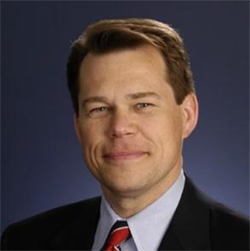
David Rehr is a professor and director of the Center for Business Civic Engagement in the Schar School of Policy and Government at George Mason University. He teaches Advocacy, Nonprofit Leadership, and Understanding Special Interest Groups.
Rehr has more than 25 years of experience in advocacy, governance, and public policy. He is one of the nation’s top authorities on communicating with the U.S. Congress and is an expert in the nonprofit association sector.
His eBooks, Cutting through Congressional Clutter – Proven Ideas and Tips to Gain Influence and be Heard and How to Lead Better Meetings and Enhance Your Organizational Effectiveness offer proven tips to understanding how Congress works and how to make meetings work better. He is also the author of Creating the Right Association Culture, which examines ideas on how to create an association culture that position’s the enterprise for success.
Another eBook, 8 Traits of an Exceptional Association CEO, is gleaned from research, life experiences, and interactions with some of the most successful association leaders in the country. The measurement mandate: How associations measure their Performance researches the state of association performance indicators. His next eBook focuses on branding and positioning your organization, issues, and yourself.
Rehr previously served as president and CEO of the National Association of Broadcasters (NAB). There, he was a strong advocate for radio and television broadcasters—meeting with policymakers, testifying before Congress, and bringing innovation to the organization. At NAB, Rehr was a leading advocate for innovation and advancement in the broadcast business, spearheading a multimillion-dollar technology advocacy program for broadcasting, leading the TV industry’s $1.2 billion digital television (DTV) transition marketing campaign, and initiating Radio 2020, an initiative that ensured radio’s value would be recognized well into the future through the Radio Heard Here campaign.
Before joining the NAB, Rehr was president of the National Beer Wholesalers Association (NBWA). Under his leadership, NBWA’s visibility in the advocacy community soared, and the association was ranked as one of the top 10 most influential lobbying organizations by Fortune magazine. He started his career in advocacy on the staff of the National Federation of Independent Business (NFIB) after working as a professional staff member to the U.S. House of Representatives Small Business Committee and for former member of Congress, Vin Weber of Minnesota.
Rehr has been named to Washington Life magazine’s Power 100 list and has been listed as a Top Association Lobbyist by one of Congress’ “must read” publications, the Hill. He has also been featured in Beachum’s Guide to Key Lobbyists and has been named one of the top 20 most influential people in radio by Radio Ink magazine.
Rehr is the author of The Congressional Communications Report, landmark research on communication methods and preferences of congressional offices, their staff, and those working to influence them, now in its 3rd edition. He is also the principal researcher of “The Honest Leadership and Open Government Act – Five Years Later” (a review of lobbying disclosure laws) and the “2013 Factors of Influence Report” (which measured lobbying firm effectiveness).
In January 2013, Rehr released the results of the “Social Election Media,” which looked at the impact of social media on the presidential election. He also authored research on “Congressional Attitudes Toward American Economic Institutions” and was coauthor of “Trends in Business Political Action Committees: 2013-2014 Election Cycle.” Rehr released his first book, From Analog to Digital Television – The Greatest Public Relations Initiative in TV’s History, in 2018, documenting how the historic technology transition took place.
Rehr has presented to leaders all over the world, including senior executives at the Business Roundtable on communicating with the U.S. Congress, the U.S. Chamber of Commerce on “Branding your Association,” and “Think Big and Deliver – Innovation” before Equifax Corporation’s global leadership retreat. He has appeared or has been quoted in major U.S. media outlets, including FOX News, CNBC, Sinclair, Fox Business, and the Wall Street Journal. He has also appeared internationally on Canal Plus (French Television), Canadian Radio Corporation, on one Ankara English television.
Prior to joining the Schar School, Rehr was senior associate dean and professor as the Antonin Scalia Law School at George Mason. He started his academic career as a professor at The George Washington University’s Graduate School of Political Management (GSPM).
Rehr founded and serves as CEO of TransparaGov, Inc., a privately held company with a mission to bring transparency and real-time information tools to state and local government leaders to encourage stewardship of resources. He is also president of the TransparaGov Educational Foundation.
About Mark Halperin
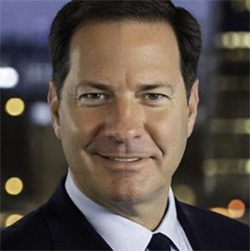
Mark Halperin is a distinguished political journalist and media personality with over three decades of experience covering and analyzing American politics. He currently serves as Editor-in-Chief of 2WAY, an interactive live video platform dedicated to unique conversations, open debate, and unbiased discourse.
On 2WAY, he hosts two flagship programs, The Morning Meeting and 2WAY Tonight, offering viewers sharp insights into the most pressing political developments of our time.
Halperin is also the host of Next Up with Mark Halperin on Megyn Kelly’s MK Media where he continues his commitment to elevating political discussion through thoughtful and informed dialogue.
Halperin has co-authored two New York Times #1 bestselling books, “Game Change” and “Double
Down,” and been the co-host of Showtimes’ “The Circus” and Bloomberg TV’s and MSNBC’s “With All Due Respect.” He was also the political director of ABC News and the editor-at-large and senior political analyst at TIME magazine.