
Reserves are an often overlooked pillar of American defense and public service. When you dig deeper, you will realize that they are more than just additional fighting forces during times of emergency. David Ramadan takes a closer look at the roles and responsibilities of the United States Army Reserve with his guest co-host Commander Dan Matthews and his guest Commander Sean Purdy. Together, they explore how Reserves continue to strengthen the connection between civilian life and national service because of their particular professional skills and career backgrounds. They also discuss how modern technology continues to transform the public service work of Reserves and the US military as a whole.
Reserves With Commanders Sean Purdy And Dan Matthews
We're taking a closer look at the often-overlooked pillar of American defense and public service, the US military reserves. These are men and women who balance civilian careers, education, and family life while remaining ready to serve when called.
With me, as my co-host, is Commander Dan Matthews, a Schar School graduate student and a Navy reservist. Our guest is Commander Sean “Cake” Purdy, who brings both military and private sector experience to the conversation. Together, we'll explore the value of reserves in the modern world, what they do, why they matter, and how they continue to strengthen the connection between civilian life and national service. Commander Purdy, welcome.
Thank you so much. I’m happy to be here.
Commander Matthews, my co-host and my fellow Patriots at George Mason, welcome.
Thank you so much. I’m happy to be here as well.
The Story Behind Commander Sean’s Interesting Nickname
Thank you. I got a story behind this cap that I'm wearing, which I'll share in a minute. I want to start with you, Commander Purdy. Tell me about the nickname Cake.
In aviation, many aviators get call signs. I'm no exception. My original call sign was actually pancake. When I was in my first squadron, they would always see me at Waffle Day on Sundays. As they thought about what call sign they wanted to give me, they said, “Waffle would be cool, but that seems way too cool. Let's call him pancake instead.” My call sign became pancake.
I have a very easygoing demeanor. When I used to write our schedule, it was a lot of fun. I would sometimes get frustrated with last-minute inputs and things like that. Everybody would say pancake would be my happy-go-lucky, jovial self, and flapjack would be my alter ego. As time went on in the squadron, people would continue to call me Pancake, then finally, Cake. By the time I was leaving the squadron, people were going to make Cake all the time. That's what stuck.
That's a great story. Thank you. I am wearing a cap of the USS Dwight Eisenhower. I had the honor and pleasure of visiting the Eisenhower when it was in Norfolk one year, when I was serving in the Virginia General Assembly as a guest of the Mini Boss. I'm going to ask you, Commander Purdy, to tell us a little bit about what do Mini Boss is and what he or she does. You were a Mini Boss, as I learned, and they customized this cap for me with David Ramadan on it. It's on my shelf as a reminder of that fantastic visit. I pulled it out for this episode, in honor of the Navy. Thank you, both, for being with me.
All About Reserves And Duties Of A Mini Boss
Let's start. Let's talk a little bit about understanding the reserves. In addition to explaining what a Mini Boss is, Commander Purdy Cake, could you tell us what exactly reserves are? How do they fit into the broader structure of the US military? It’s so that our audience, the students of the Schar School, can get a better understanding. Most people don't know.
Let me start with the note that the views both of myself and Commander Dan Matthews that we express here are our own and do not necessarily reflect the official policy of the Department of Defense, the Department of War, the Department of Navy, the reserves, or any other US government agency. What are the Navy Reserves? The Navy Reserves is that connective tissue that links the full-time active duty Navy to the broader American public. It is made up of men and women who choose to continue serving their country while also building civilian careers. People like Commander Matthews, who pursue education and also raise families.
We often describe reserve as citizen sailors. The model is that people may work as engineers, teachers, airline pilots, in many cases, doctors, or business leaders. In my case, strategy consultant during the week, and then train and deploy alongside active sailors when the nation calls. The reserve force supports virtually every mission area in the Navy, aviation, surface warfare, special operations to cyber intelligence, medicine, and logistics.
Reservists are trained to the same standards as their active duty peers are trained to. They can be mobilized for global missions, ranging from combat operations to disaster relief. At its core, the reserves provide the Navy with a scalable, ready capability. In peacetime, we've seen specialized expertise and institutional knowledge. We can rapidly expand that force to meet the national needs. It's one of the most efficient and flexible force structures in the government. It lets the Navy project power globally without maintaining a permanently larger active duty footprint. I'll stop there so I can describe the Mini Boss piece, but I want to see if you have any questions before I do.
I have follow-ups, but please tell us about being a Mini Boss.
From 2014 to 2016, I was serving on the USS Essex LHD-2. That is an amphibious assault ship. This is not as large as a Nimitz-class aircraft carrier, but it does have, back at that time, AV-8B Harriers and now F-35B Joint Strike Fighters. What a Mini Boss does is they can control the entire flight deck. As you can probably imagine, a floating airport can be an extremely complex environment. We have to maintain control of all airspace around us and know what's coming in and going out to keep all of those aircraft safe.
That is what the Air Boss does. The Air Boss connects with strike officers who control the skies outside of a certain range. When they get within visual range of the tower, the Air Boss controls them. The Mini Boss controls all aspects of the flight deck. If you could imagine, an aircraft is coming in to land, getting gas, and things like that. There are a lot of logistical activities that need to occur when that happens. As well, we are trained for any type of emergency that may potentially occur. We have an aircraft crash cruise standing at the ready for any potential scenario.
Thank you for that description. How does the service in the Navy Reserve differ from active duty, if any, besides the time that you spend on active duty?
That's an excellent question. To me, it's mostly about the focus of what you do. If you think about a reservist, a lot of the things that we do, we focus on process. An active duty member focuses on tactical leveling engagement because they are in it every single day. They know the systems in and out. They know the tactics in and out. The reservists come in, and because they don't have access to those systems on a daily basis, those skills would atrophy over time.
If you could imagine a flying pilot not flying very often, those skills would atrophy. Because of that, the reserves, in some ways, have transitioned to focusing more on the operational level of war in the strategic realm and have focused on planning and operations at that level. How does that change? To me, you focus on a broader skill set in a broader picture, thinking about what a commander thinks about at a three-star or four-star level.
Understanding The Strategic Value Of Reserves
Thank you. From your experience, talking about personally experienced here, what strategic value do the reserves bring to the US readiness and the global engagement? We are a country. We're not going to talk about the political side of the military here at all, but we are a country that has our active duty and reservists all over the world. What is the strategic value of reservists? What do you bring to the US readiness on the global engagement level?
If you think about the strategic situation the US finds itself in, this is an increasingly complex security environment with competition. We call it great power competition. With that great power competition across multiple domains, sea, air, land, cyber, space, reserves play a vital role in each of those domains and each of those environments because they can bridge readiness and resilience. The biggest strategic element of this is that they provide surge capacity. Meaning that the Navy can scale up for crises without maintaining that size year-round. It's not just about numbers, it's about expertise.
Many of the reservists that I have met, Dan included, bring deep civilian experience in areas like artificial intelligence, cyber defense, logistics, consulting, and strategy. That dual background, where you can bring the best of breed for both worlds, allows the Navy to stay agile and adaptive in a world that changes extremely quickly. For example, in my own community in aviation, reservists can fill critical billets, supporting carrier waiting, training, fleet exercises, and operational planning.
During major operations or humanitarian missions, reserves have integrated quite seamlessly with active units, often serving as that bridge point between the joint and coalition partners that affect that humanitarian mission. Strategically, the reserves ensure that the Navy maintains global engagements that are sustainably manned. It's part of what keeps the US military responsive, but also affordable. The reserves are a force that can scale. It's also, in my opinion, a force that can both innovate and endure over time.
Reserves are part of what keeps the US military responsive and affordable. It is a force that can be innovative and enduring over time.
I know you're talking about the Navy Reserve, but this mirrors the same thing with the Army Reserve, the Marine Reserve, and the Air Force Reserve, correct?
That's correct.
We all do the same mission for all of us. We focus on the specific branch we're in, but we all provide that operational and strategic reserve for the forces to spin up and tackle whatever mission we have to deal with.
One of the very interesting elements of this, too, is that the reserves have changed over time. Because we're now focusing on this operational level of war, we can get very deep subject matter expertise. On the active duty side, you come into a tour every three years or so, and then you change to a new tour. You do a broadening assignment. You think and focus on that, and then you move on to another staff assignment, or move on to your next career milestone in leadership or tactical engagement. For the reserve, we don't necessarily have that same path. You can have people across the Army, the Air Force, the Navy, and the Marine Corps who stay in certain units for 15 to 20 years. That level of deep expertise and deep connection with the staff can be vital in conflict.
Addressing Common Misconceptions About Reserves
Speaking of the deep expertise and people who bring their experience from the civilian world into the military as reservists, Commander Matthews. One of the things that I love about our University of George Mason and our school, in particular, the Schar School of Policy and Government, is this interaction of professional students, professional professors, and people with hands-on experience from the real world, having people like yourself in our graduate classes, and what other students can benefit from. Before I turn this over to you as a co-host, where you can bring up some questions that we want to ask Cake about, tell us a little bit about your background, a little bit of what you're doing in the Schar School, and then the floor is yours to ask some questions.
Thank you very much. I did twelve years of active duty as a Surface Warfare Officer. I was on two ships, LHD as an ensign, getting my qualifications. I went to the destroyer Treno. I went and did some tours with the Marines, then I got to see the world in Okinawa and then Camp Lejeune. I rolled to the reserves. I have been a reservist for a little over five years.
At Schar School, I'm doing my degree. It’s the same one you did with a global policy, focusing on global risks and strategy. It's definitely helping me appreciate the Schar School. It broadened my understanding of economics, especially, Schar helped me learn to speak the economic side and the security side. Learning those two languages has been very good in broadening my skillset, as Cake was talking about on how we get better, and some of the things the reservists can do.
Thank you for that background. Now, what questions would you like to ask Commander Sean Purdy Cake?
What misconceptions do you think civilians or full-time service members often have about us as reservists? How do we address them?
I think the most salient part of that question is the specific mission set that people have in the reserves. People think, “You just do this part-time. This is not your main job, so you have a limited focus on certain things.” I think the challenge that some people might have is that it is somewhat difficult to balance both things. To me, at least, as I think about the reserves and my own civilian career, people often have more of a perception of military members in general than they do specific reservists.
For instance, I think there's a misperception of people in the military that we're inherently inflexible, that we're inherently hierarchical because of our command structure. It's very focused on the pyramid command structure. I would say that, being part of different organizations, certainly, in consulting, where you have an extremely flat culture and the best idea wins, those are some of the misperceptions that I have faced as a reservist.
Finding Purpose In Serving As A Reservist
Thank you for that answer. Great perspective. I wholeheartedly agree. On the other side, what are some of the most rewarding things you've had as a reservist?
For me, the most rewarding experience has been around people and purpose. I've served as a commanding officer. I've served as executive officer. I've had the privilege of leading sailors, including yourself, from all walks of life, pilots, maintainers, planners, and information warfare professionals, who volunteer their weekends, their vacation days, and time away from family to continue service to their country. Seeing that commitment is incredibly inspiring.
One moment specifically that stands out to me is the idea that people whom I have either decided to focus on and mentor and give up significant amounts of time, when those people get promoted and advance in their careers, that to me is so absolutely rewarding, when they get to hit that next milestone, much as yourself on October 1st. I believe that those are probably the best experiences that I get to face.
One thing that I like to focus on is the mentorship aspect. I'm on the aviation mentoring network in the reserves. That connects junior officers with senior leaders for career development and personal growth. When you get to see a young officer who comes off active duty, who doesn't understand the differences between active duty and the reserves, and can potentially, in some ways, get lost in the shuffle with their career. You see them gain confidence and gain that skill set, or choose to stay in service because of the support that you've given them. That's what makes it all worthwhile.
I agree. I definitely thank you for your mentorship. I know how I had years due to your leadership. Thank you, sir. With that, if someone wants to join the reserves, but they are not sure, what would you tell them?
Since they're coming up to me, I always tell them to talk to somebody who's doing it. If they're coming up to me, they are talking to somebody who's doing it. Every reservist has a different story about why they joined and why they stay. For some, it's about continuing their military journey. For others, it's about reconnecting with service after years in the civilian world. If you're unsure, think about what draws you to service in the first place.
To me, the Navy Reserves gives you an opportunity to contribute meaningfully to something bigger than yourself without giving up everything else in your life full-time. You'll be challenged, but you’ll also grow. You'll get lifelong friends. You'll get mentors. You'll get experiences that are going to shape who you are. My advice is not to let uncertainty stop you. Take that first step and continue talking. Continue educating yourself about the different opportunities that reserves can potentially present to you. That's what keeps people coming back. It’s that broader purpose.
I once read an article. It was in the Harvard Business Review. It discussed the meaningful elements of a career. It discussed purpose, belonging, recognition, and autonomy. To me, at the sacrifice of some level of autonomy, you get significant purpose, you get significant belonging, and you get significant recognition. As you advance in rank, that autonomy comes to you, and then the purpose is much broader. It's not just about yourself and your own career. It's about those whom you lead and inspire.
As you advance in military rank, your autonomy and purpose become broader. It is not just about yourself anymore, but also those you lead and inspire.
I do need that article to read. You need to send me that link afterward. Let me ask you something. Clarify for our audience the difference between the reserves and the National Guard. Everybody had seen the National Guard on TV. This is in the news. Again, we're not going to get into the politics of it, but they're not the same. Clarify the difference between the National Guard and the reserves, please.
The military reserve is the federal component of the Armed Forces. We report to the president, the Department of Defense, Department of War. We train part-time, and we can be mobilized for national defense or overseas operations. The National Guard Army and National Guard Air Force serve in dual state and federal roles. They report primarily to their state governors, but can be federalized by the president if the situation calls for it. The guard is often deployed for state emergencies, natural disasters, civil disturbances, as well as federal missions abroad. In short, the reserves are for federal missions. The National Guard is for state and federal missions.
How do they get into the National Guard? They both have to be active duty, right? There is no active duty National Guard, or is there?
Let’s say someone wants to join the National Guard. You can do that straight. You don't have to go active duty and then go National Guard. You can go join the National Guard. You still do the basic training that any service member would for that branch. You go through that. You go to A school, and then you go to your reserve unit and do that. You can come back to active duty. Cake and I were both active duty rolled to the reserves. Same thing if you're Army or Air Force. You can go off active duty, join the reserves. There is an inner service transfer for both active duty and reserves. People who are one branch active duty can join another branch and the reserves. Whatever fits their lifestyle and the needs of the service.
How To Enlist In The Reserves
We do have people who come in from the street a number of times. We have people who are doctors who tell themselves, “At 40 years old, I want to do something different. I want something more, but I don't want to give up my practice. I just want something extra.” They come in with an amazing skill set in medicine, and then not knowing anything about the military. They come into the military directly. They can do that through the Navy Reserves.
Is that limited only to specific professions as doctors or engineers, or could they be generalists as well?
We have a mix of everybody.
You can come in. You can enlist. If you have a degree, you can become an officer. When Cake and I were at our unit together, we had a civilian join. He was a cyber guy. He became a cyber junior officer. This falls with us, but he has a cyber job as a civilian on the outside.
How much of a full-time requirement or the time that they need to spend in training, and all before they can then become a reservist?
It depends on what branch and what they're going into. If they're going to be enlisted, they go through boot camp. That varies based on service. I want to say the Navy is eight weeks, the Marine Corps is twelve, the Army, Air Force, and Space Force have their own lengths. You can be a Space Force Reservist right now.
The other ones, you do your boot camp, you join the officer, you do your direct commission officer, you do OCS, and depending on the type, if you're going to be a doctor or a lawyer or something like that, when those very specialized skill sets. DCO, you go through the training. That's about twelve weeks to get commission. You'll do your advanced training, and then, depending on what that is, that can be a couple of weeks to a couple of months. It all depends on what your MOS is. There's no one quick, easy answer.
For your classmates, Commander Matthews, at the Schar School, if they decide they finish their master's program, their MPPs, or Masters in Public Administration, MBAs and pause or Trevor program they're in, we also have our security programs that we're known for and Intelligence Master's of Mason, they graduate with that and they decided to join, They come in as officers. That could be simply three to six months of full-time engagement, and then they will be reservists instead of being full-time.
It depends on which branch they want to go to. They can be officers. They can be enlisted. You don't have to be an officer if you have a degree. You just have to have a degree to become an officer.
I see that they would want to be because they have spent many years in undergrad and grad school. They may want to do that as a career move.
More than likely. One of those conversations I'd have with the person, what they want, what they're looking for out of it. Both of them have honorable professions. They both served, just in different roles. It’s probably an average of let’s say 36 months of commissioning, and then you do your one week in a month, two weeks a year minimum. I would encourage, just like anything, with the reserves, if you can do more and it works for your schedule, do it.
There are many people. Some of my sailors have doctorate degrees. Some of my sailors have been business owners. Some of my sailors have gone to top-level education across the country, and everything in between. I would say that the reserves in general are a lot more flexible, depending on what you want to do. To answer your question about the direct commission officer program, it's five weeks in length for the Navy Reserves. I looked it up. For the most part, most people would want to go OCS in the officer route based on their education. There are many reasons why you would want to enlist as well.
Is there an age limit? Gray-haired people like you and me now, if we're on the outside, we probably could not join. Correct?
It depends on what, specifically. Medical has the oldest age limit, but it depends on what branch you are going into, and then what MLS within each branch. There's not one flat answer to that.
Commander Purdy’s Journey From Reserves To Active Duty
Thank you. Since we're talking about individual careers, perspectives, and options, let's talk about that a little bit. Commander Purdy, let's go back to you. Tell us about how you started. What was your trajectory in the Navy before you were a full-time, before you went as a reservist, and what inspired you to do that?
Going back to the start of my career, I read a phenomenal book by General Norman Schwarzkopf called. It Doesn't Take a Hero. That was in high school, and so I said, “I want to be a tank driver and I want to be in the Army.” I applied to West Point. My best friend's father said that if you're going to apply to West Point, you'd better apply to the Naval Academy and you’d better apply to the Air Force Academy. I did, and lo and behold, I got into the Naval Academy. That's where I went. I said, “I'll figure out how to be in the Army maybe later,” because I did Army JROTC, and I knew nothing about the Navy.
While I was there, I said, “This flying thing looks amazing. I should probably try and go to that. I put pilot as my top choice. I ended up getting it, thankfully. I then went straight to flight school. As I was there, I wanted to make sure that I was qualified to do anything I wanted. I selected helicopters. I had a great time flying helicopters on the East Coast and the West Coast. One of my most rewarding parts of my career that I got to do was teaching people how to fly the H-60 helicopter. Some are music majors. One of my students is currently running for Congress. It’s really amazing.
I then went on my Mini Boss tour. At that point, the purpose, belonging, recognition, and autonomy elements had crept up on me. I said to myself, “What does the rest of my career look like? Could I do something different in the civilian world and still maintain a great career in the military?” I found that through business school. I decided to go do that and then transition to strategy consulting on the civilian side.
On the reserve side, I tried to be my best to pick up command as quickly as I possibly could. I did that, and then transitioned to a number of different fleet staffs where I focused on bridging the gap between information warfare, cyberspace, and the other key capabilities that the military can bring to any conflicts, and hopefully prevent that conflict. I got into leadership and now focus on air command and control. That's my story, and where I have gone.
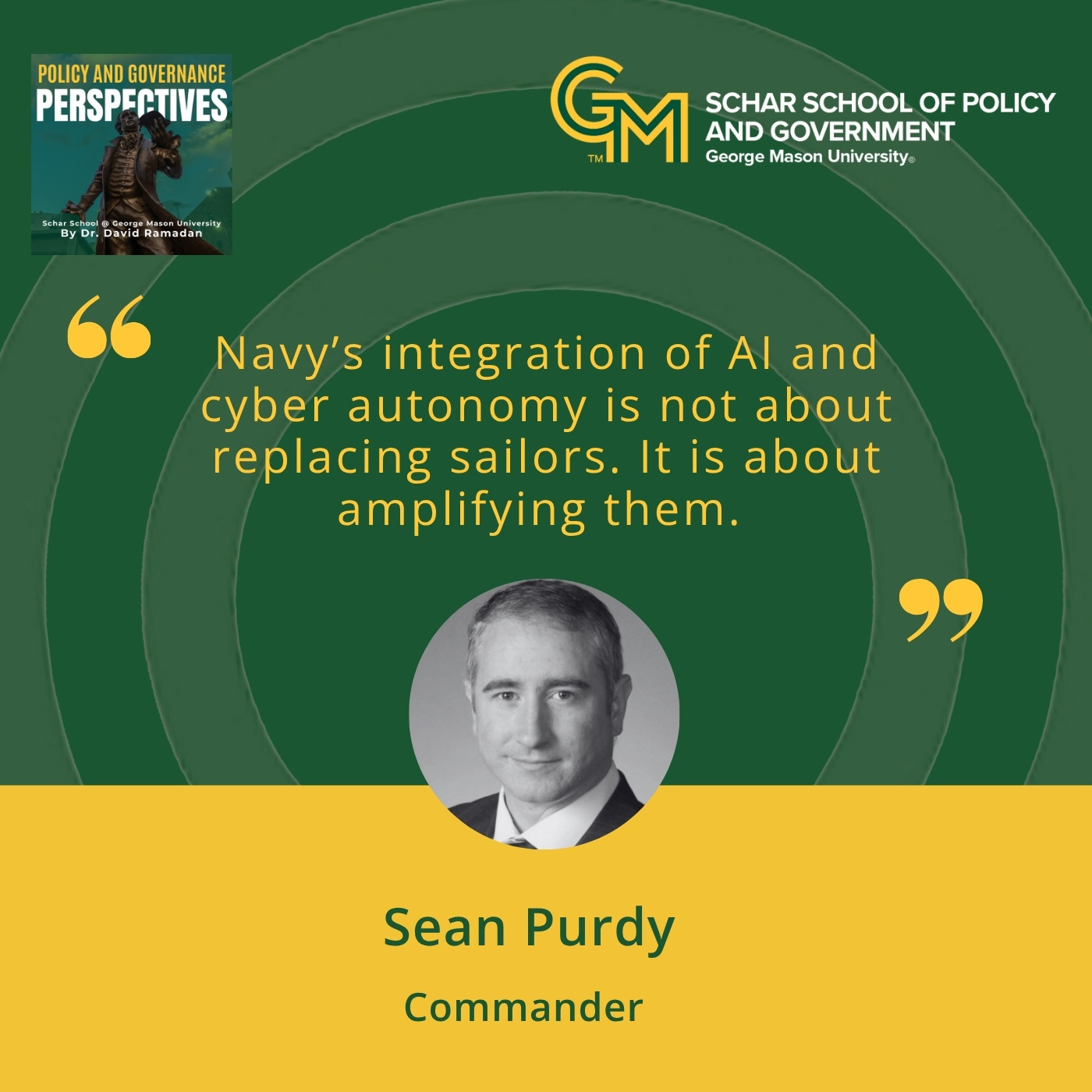
Smart tools can make a much smarter force.
Are you still flying?
Only in my civilian life, not in the reserves.
The Role Of Reserves In Preventing War And Conflict
We got to talk about that flying in civilian life after the show, because one of my dreams is to fly a helicopter. You mentioned something that I find interesting. That is preventing conflict and war as part of your role. Tell us a little more about that.
I'm going to reiterate that this is my opinion. It does not indicate the Department of Defense, War, or Navy policy.
That's called the Department of War. This is what I'm saying, not you. The Department of War that prevents war. It’s your personal opinion. You're not speaking for the Navy.
If you think about it from a game theory perspective, I was a math guy. I studied a lot of game theory. If you have an extremely strong stick, generally speaking, if somebody knows that you are willing to use it, they're not going to mess with whoever has that. Part of the reason that the US military, in my estimation, focuses so much on having that bigger stick is not only that we find ourselves focused on a global economy, but we also want to make sure that if and when people come knocking at our door, we're ready.
How The Fighting Force Is Changing In Today’s Political Climate
I was at an event on Monday. I saw somebody I knew from my political experience and political circles in the past. I got to reconnect with him. He is the former Secretary of the Navy. After he left the Navy, he ran for office in Virginia. He is a Virginian. The office run didn't work out for him, but his experience in the Navy was quite important and beneficial for his leadership perspectives. This is open to either one of you, Commanders. How much of that experience shapes your policy opinions? I'm not going to say it again. We're not talking about politics. We're talking about policy here. How much of that experience shapes your policy opinions or policy perspectives, regardless of party and regardless of politics, or apolitically?
In the 1600s, Britain had the world's largest empire, all the way up to 1945. That's when they started. Roughly, they started in the 1600s and then they came up to 1945, shortly after World War Two. Part of the reason that they were able to sustain that empire was that they had the world's strongest expeditionary fighting force. As I think about the interconnected globe and the $20-plus trillion economy that Europe has, the $30 trillion economy that we have, the partnerships that we have, the strong expeditionary fighting force that we have is truly one of the biggest reasons, in my opinion, that we have a strong and effective expeditionary fighting force.
History has told us that that is key. It's now moving into space and cyberspace, as most people know. From that historical perspective, I continuously think about what the right makeup of the force is. Is it worth it to have the expeditionary fighting force as strong as it is? That shapes my philosophy that yes, it is. We are propping up an entire global part of the economy to do so. That's how I would answer that question.
You made me think here. Again, the open question is for either one of you. We saw in recent wars that are happening as we speak, such as the one in Ukraine and Russia, the total change of the important elements of that. This is from a political science point of view. It is that the tools have changed, drones and AI. Those are what changed today and how you could you could target individuals. I hail from Lebanon, and I grew up during a civil war. I grew up in major wars. I remember the USS New Jersey on the shores of Beirut. When those cannons were firing, the whole city would shake.
Yet, what we saw in Israel, southern Lebanon, and other places today are drones that can target the driver of a car without even obliterating the full car or the entire vehicle. In your personal opinion, and you're not speaking for the Navy or the Department of War, how are those tools changing in the naval space?
At the end of the day, war is a violent contest of wills between states. As you said, the tools are changing. The tools have always been changing. It's how we use them together. The Navy, over the last century, released longer-range and longer communications. That's where we're adopting our training or adapting how we train and where we deploy. Logistics is always going to be important. The nature of war never changes. The character of war does change, and we have to adapt, but we also have to be careful of that.
We're not trying to overadapt too fast and get strong in one area and weaken ourselves in another area. It's always that careful balance, the different parts of military readiness, and making sure we're paying attention and learning about what is new out there, how to integrate it with what we have. I need to reiterate, these are my personal opinions. Not in any way does it represent the Navy, the Department of Defense, the Department of War, or the US government in any way. The Navy has become more lethal in longer-range, faster ships and more precise weapons, but it's how we use them and how we integrate them as a whole force.
Part of my main job is that a lot of people ask questions about this specific piece, all of these high-fidelity systems. How long is it going to take to replace the F-16 or the Joint Strike Fighter, or other key capabilities that we have? I often think to myself that those are very large programs. While you have a number of different elements that are changing, some of the basics are staying the same because those are low-fidelity capabilities versus the high-fidelity capabilities we have.
What's changing is the need that we have for both. We need high-fidelity systems. We need low-fidelity systems. To me, thinking about the specific pieces because you talked about AI. You talked about autonomous systems, you talked about technology. Why don’t we unpack that? To me, AI is changing warfare from reactive to predictive. It allows commanders to anticipate threats and to process information at a machine's speed. They make faster and more informed decisions at what we call the speed of relevance.
Cyber is the new high ground. Wars today are not just fought with ships or aircraft in a now contested space, but it's also with code. Defending networks or disrupting adversaries before a shot is fired is a critical component, potentially, in a future conflict. We talked about autonomous systems. They are redefining what I would say is presence and persistence. What that would do is that uncrewed vessels, aircraft, undersea vessels, or vehicles extend our reach. They extend the time at the station. They operate in riskier environments. They free humans for more complex decision-making that we're pretty much built to do.
A couple of other pieces. To me, technology is accelerating the pace of conflict, but human judgment remains part of the decisive picture for conflict. Machines can process data, as we all know. It can process it very fast, but strategy, ethics, and accountability stay with us. The Navy’s integration of AI and cyber autonomy is not about replacing sailors. It's about amplifying them to me. Those smart tools can make a much smarter force. Think about your ChatGPTs of the world or all of those things. People often say that AI is not going to replace you, but someone who knows how to use AI will replace you. That's how I think about the modern-day sailor. The modern-day sailors need to be smart, need to be effective, need to be mission-focused, and oriented. That's how we get to the next level.
How The Academic World Can Support The Military
We're running up on time. I can stay here for another two hours, talking about these issues with both of you. It's truly fascinating for me. I'm sure our audience, Mason Nation, is going to enjoy it. I want to bring it back to where you talked about ethics and accountability. Let's relate that back to our context of universities and education. Cake, you went to a top graduate school. Dan and I are proud of our top master's programs from George Mason, specifically from the Schar School.
Where do you connect the dots? If you were given a magic wand and asked, “What would you want from the Schar School of Policy and Government today to be accessible and an advantage and a supporter of the modern Navy, what would you want from our students? We're not a naval school, so we're not going to teach them the military side. I'm talking about the educational side, the critical thinking side, and keeping it within ethics and accountability or similar issues. Open to both of you.
One thing I am very happy about with Schar is the diversity of thought that I see and read. I see a pretty good range of readings. I would reinforce ending wars. The more viewpoints you see, and especially from different countries, different time periods, different disciplines, going into that and forcing you to engage with these, think critically about these. Understand other people's theories of mind, how they see the world, and what their background assumptions are.
One of my undergrads was in Philosophy. I was always taught to define your terms. I see that a lot of times. People are coming from very different terms when they're talking about something. I know I've had arguments or we've been going on, I realized now or later that we're using this word completely differently, so I’m making sure those are there.
As I said, I've done security side for a long time. Schar has helped me round out my economic side and see the different perspectives there. Also, understanding that we have our silos of excellence. It's interconnecting those understandings. You have an information specialty. You have science, economics, math, drama, pol sci, and security. We are able to talk to each other and communicate with each other. That makes us stronger yet.
Understanding the ethical implications of new technology application is not necessarily academic, but it has to start in the classroom.
“All Together Different” is our tagline at George Mason. Commander Purdy, overall, what do you what would you want to see, already see, continue to see, or see differently from that academic world in support of our modern military?
When you look at schools like the Schar School at George Mason, you need to focus on where technology, policy, and ethics intersect. I think that's where the military is headed. We talked about AI, we talked about cyber, we talked about autonomous systems, and how they're changing how we fight. I talked about how we need to think about the accountability and the human judgment side.
For the Navy Reserve, the education that schools can bring to us and that dialogue can be very critical. We operate at the highest levels of warfare. I think the seam is between the civilian innovation and the military application. My understanding of this question is understanding the ethical implications of new technology applications. It's not necessarily academic. It's operational for us. It starts in the classroom. Understanding how we can make sure that we use these tools responsibly is probably what keeps people like you at the center of the mission.
Service, leadership, purpose, ethics, and accountability. This is a fascinating discussion about values that define the men and women of the US Military Reserve. It reminds us that serving one's country doesn't always mean wearing a uniform full-time. It’s being ready to step up when called. My sincere thanks to both of you, Commander Dan Matthews, my fellow Patriots at George Mason, and the Schar School of Policy and Government, and Commander Sean “Cake” Purdy, for sharing your experiences and insights.
Your stories reflect what makes the reserve force such a vital part of our nation and our national strength. The seamless link between civilian expertise and military readiness. I certainly learned from both of you. I know for a fact that our audience at the Schar School is also going to learn from your experiences. I look forward to continuous conversation. I am David Ramadan. This has been the Policy and Governance Perspectives. Until next time, stay engaged and stay informed.
Important Links
- Dan Matthews on LinkedIn
- Schar School of Policy and Government at George Mason University
- It Doesn't Take a Hero
About Commander Sean Purdy

Commander Sean Purdy is a native of Mattoon, Illinois and graduated from the United States Naval Academy with a Bachelor of Science Degree in Mathematics in 2005. He began his training as a Student Naval Aviator in 2006, earning his designation as a Naval Aviator in September 2007. He reported to HS-10 for qualification in the SH-60F and HH-60H. He also qualified in the MH-60S helicopter at HSC-2.
He later earned a Master of Systems Analysis from the Naval Postgraduate School, earning the distinguished Johns Hopkins Applied Physics Lab ‘Excellence in Systems Analysis’ award. He earned a Master of Business Administration from Northwestern University’s Kellogg School of Management. He is a joint qualified officer, earning Joint Professional Military Education (Phase I) from the Air Command and Staff College and Phase II at Joint and Combined Warfighting School in Norfolk, VA.
Throughout his career as a H-60F/H/S Seahawk Pilot, CDR Purdy served in Helicopter Anti-Submarine Squadron Three, and Helicopter Sea Combat Squadron Nine, flying sorties while deployed aboard the aircraft carriers USS Theodore Roosevelt (CVN 71) and USS George H. W. Bush (CVN 77) during Operation Enduring Freedom. CDR Purdy also served at sea aboard the USS Essex (LHD 2) as the Assistant Air Officer, aka ‘Mini Boss’, in support of Operation Inherent Resolve.
CDR Purdy’s assignment ashore was as a flight instructor for Helicopter Sea Combat Squadron Three, where he was the Instructor Pilot of the Quarter, 4th Quarter, 2013.
CDR Purdy’s current reserve component assignment is Commanding Officer of Carrier Strike Group Four Air Command and Control Detachment, Houston. Previously, he was the Executive Officer of Information Warfare Training Group, Norfolk; Staff FIRES Officer for United States Seventh Fleet Headquarters, specializing in non-lethal effects integration; and Officer in Charge of Naval Operational Support Center Pensacola’s Operations Support Unit.
Additionally, he served as the Training Department Head of Commander, Europe, Africa, and Southwest Asia’s Regional Operations Center. His first reserve component assignment was as a Department Head to Naval Operational Support Center Great Lakes’ Operations Support Unit.
CDR Purdy was mobilized and recalled to active duty in 2020 to 2021 to serve on the staff of United States Central Command as an Engagements Branch Chief in the Multinational Coordination Center, within the Strategy, Plans, and Policy Directorate supporting the Resolute Support Mission, and Operation Allies Refuge.
CDR Purdy’s personal decorations include the Defense Meritorious Service Medal, Navy Commendation Medal (with two Gold Stars), Joint Service Achievement Medal, Navy Achievement Medal (with Gold Star), and various campaign and service medals.
In his civilian career, CDR Purdy is an Associate Director at CSP Associates, TX, a management consulting firm specializing in Aerospace and Defense private equity transactions and corporate strategy.
Sean lives in Spring, Texas with his wife, Sarah, and children, Ethan and Claire.
About Commander Dan Matthews
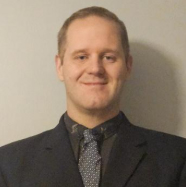
Daniel Matthews is a native of Northern Virginia. His undergraduate degree was from Old Dominion University in Norfolk, Va., where he studied International Relations and Philosophy.
He holds a Master of Arts in Government from Regent University. He is currently studying Global Commerce and Policy with a focus on Global Risk and Strategy from the Schar School at George Mason University.
Professionally he was an active duty Naval Officer for 12 years, where he deployed globally, working with many allies and partners on matters of mutual security, operations, and strategy.
After he transitioned to the reserves, he has served in a variety of leadership positions in various units supporting space, information, and expeditionary readiness and operations. As a civilian he has worked as a planner for the Department of War.
His hobbies include reading history, science, and a variety of other subjects. He also enjoys painting and jiu-jitsu.