 February 19, 2026New Student Body President Jonathan Dubois represents the university’s 30,000 undergraduates. He’s also majoring in international security and law in the Schar School. See what motivates him as a leader.
 February 17, 2026A roundup of recent media appearances by Schar School faculty, students, and staff for Schar School in the News: February 9th to 13th, 2026.
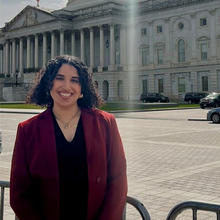 February 17, 2026Graduating senior Mariamme Latif Estafan grew up as virtually the only child of immigrants in her hometown in New Jersey. Once she arrived at George Mason University, she found outlets for her desire to study—and improve—the immigrant experience.
 February 12, 2026Vice President Mike Pence is now Distinguished Visiting Professor of Practice at the Schar School. Read students’ reactions to the first class of his course, The Character of the American Constitution.
 February 10, 2026He’s traveled the world; speaks several languages; plays cello, balalaika, and dombra among other instruments; and writes op-eds about international security issues that are published in influential media outlets. And he’s 18. Meet graduating senior Josef Wolpert.
 February 10, 2026Welcome to the 15th episode of the show, the official show of the Schar School of Policy and Government at George Mason University. We are talking about something that touches every Virginian. Whether you are sitting in traffic on I-66, working in a data center, or paying your utility bill, namely energy, how we produce it, how we use it, and whether our grid can keep up with explosive growth in data centers, AI, electrification, and population.
-
February 6, 2026I didn’t come to the Organization Development and Knowledge Management (ODKM) program at George Mason University because I had everything figured out; I came because I didn’t.
 February 6, 2026A roundup of recent media appearances by Schar School faculty, students, and staff for Schar School in the News: February 2nd to 6th, 2026.
 February 2, 2026From Army officer to global educator, Mark Flanigan’s career spans continents, classrooms, and public service—shaped by curiosity, cultural exchange, and a commitment to connection. See how the 2006 graduate is giving back to the Schar School.
-
February 2, 2026A roundup of recent media appearances by Schar School faculty, students, and staff for Schar School in the News: January 26th to 30th, 2026.
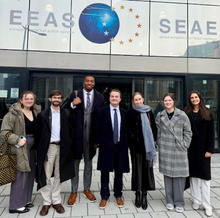 January 28, 2026With NATO and U.S. relations in the headlines—and, apparently, on the rocks—this Schar School study-abroad trip to Europe’s international security landmarks was well timed.
-
January 27, 2026A roundup of recent media appearances by Schar School faculty, students, and staff for Schar School in the News: January 19th to 23rd, 2026
